Conus leopardus (Röding,
1798)
Leopard cone, 187mm
Conus
leopardus is common in sandy lagoon areas, although it can occasionally
also be found in sand patches on seaward reefs. It is the largest cone shell,
reaching at least 187mm here in the Marshalls. It is commonly seen at depths
of 3 to 15m, but can range deeper as well. Despite its large size, it has very
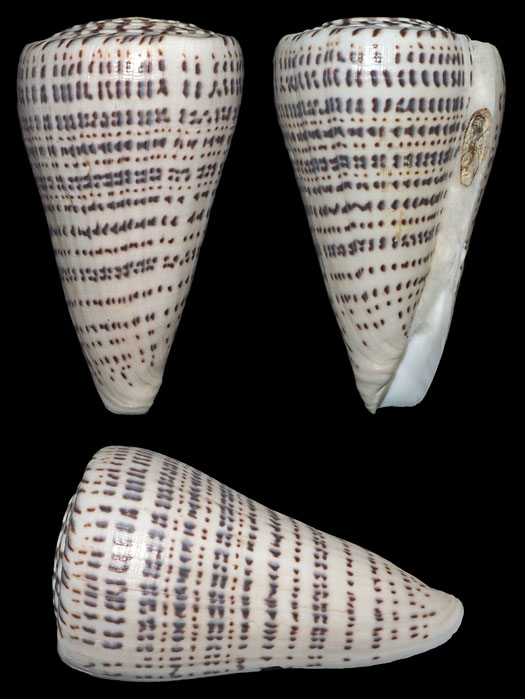
small radular teeth, and is a worm eater. The shell is white with many rows
of small black spots, but the thick brown periostracum usually hides most of
the pattern.
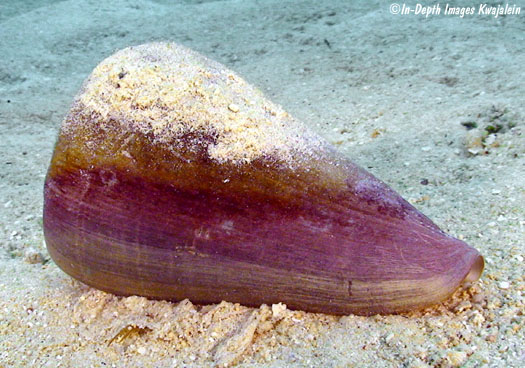
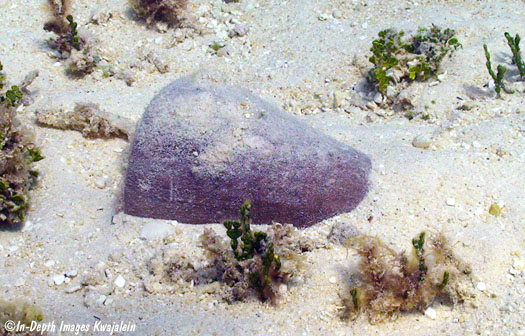
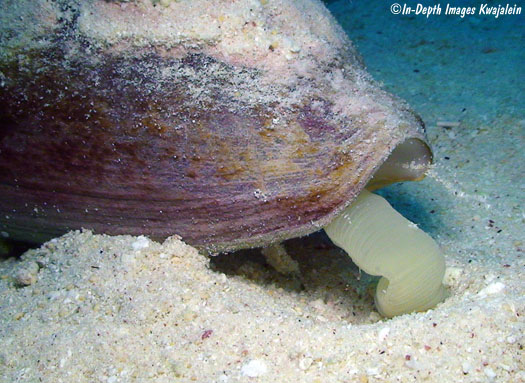
Most often by day they are partly
buried in the sand.
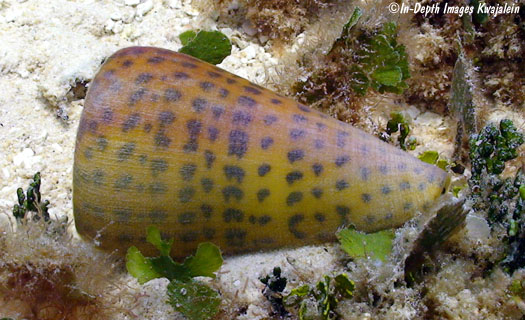
Below is a young specimen with
thinner periostracum and proportionally larger black spots. It looks like (and
could be) a Conus litteratus,
except that it does not have a distinctly purple anterior end.
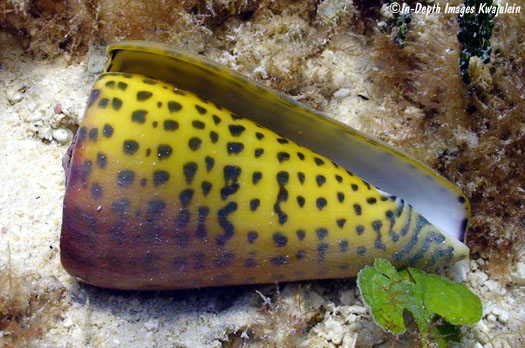
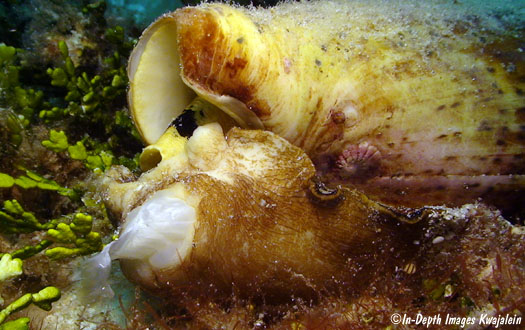
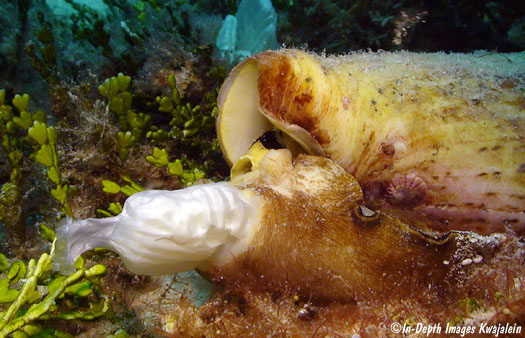
Feeding on an acorn worm.
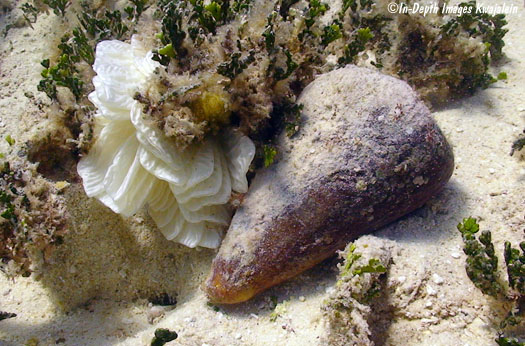
Conus leopardus often
attaches its large white egg capsules to clumps of Halimeda algae on
lagoon sand flats.
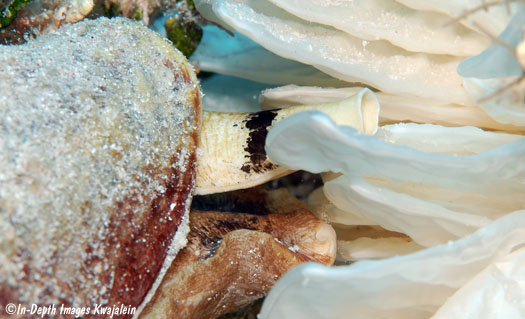
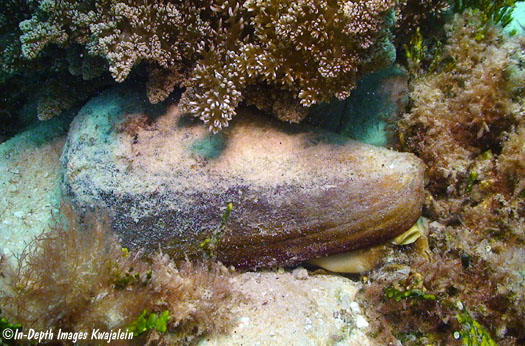
The one below was tucked under
an Actinodendron fire anemone and pushing out egg capsules.
Created 4 July 2009
Updated 12 March 2020
Return to cones
Kwajalein Underwater home