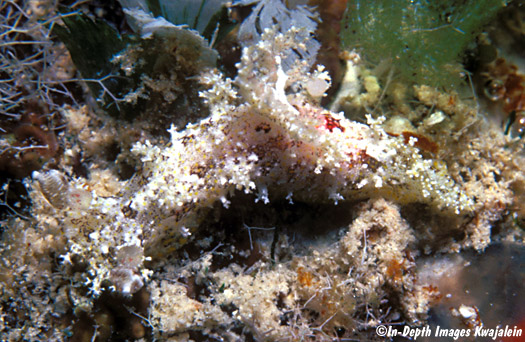
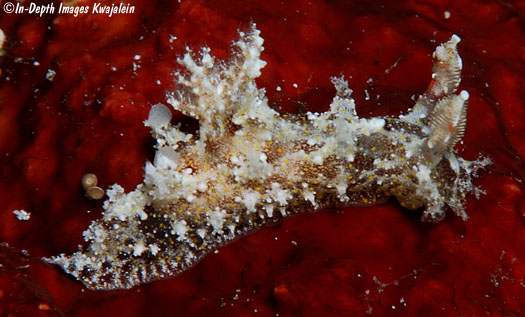
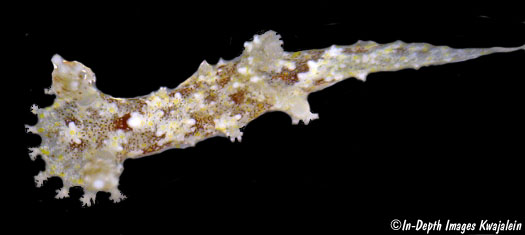
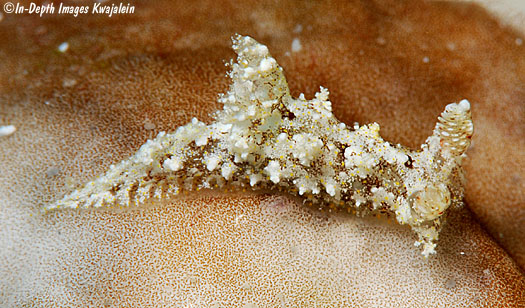
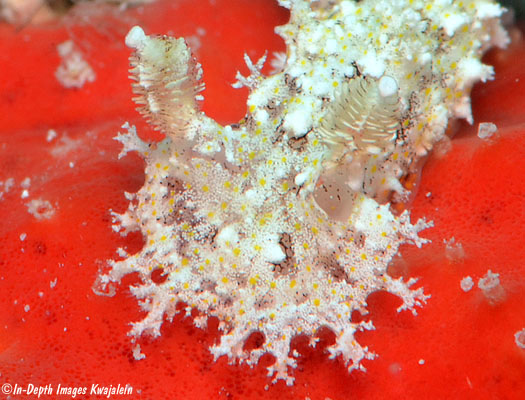
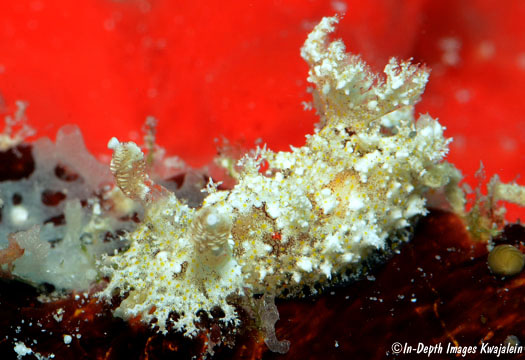
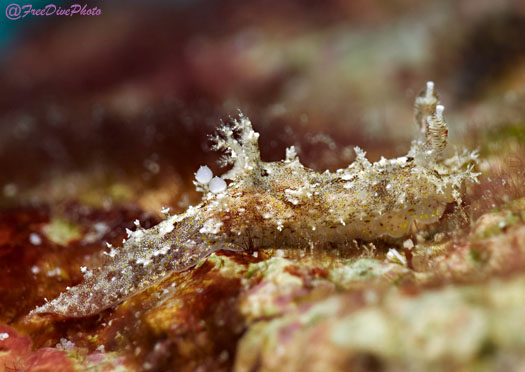
This Plocamopherus is somewhat tentatively identified as P. ceylonicus based on the photo in Gosliner et al (2008). It does not quite match specimens figured under that name on the Sea Slug Forum. Since the details of the highly papillose body are not easy to see in the photographs, our notes on the living animal follow. The body is soft and heavily papillose. There are eight larger branched papillae along the anterior margin with one to three smaller single papillae between the larger ones. There are even larger branched papillae along the lateral margins of the body, one pair between rhinophores and gills, closer to the rhinophores; one pair anterolateral to gills; and one pair with white terminal balls posterolateral to gills. There is a line of smaller branched papillae on dorsal midline of the tail, which is laterally flattened into a keel. There are several more small branched papillae in approximately a line along each side of body, and many simple papillae scattered all over the body. "Branched papillae" above means finely dendritic, often broken into numerous tiny white balls. The base color is translucent gray or white with irregular aggregations of approximately equal sized white and fewer brown flecks. The white especially aggregate in the simple and compound papillae. There is a more reddish tint around and behind the gills and a large bright red spot about 1/3rd of the way from gills to the tip of the tail. There are smaller reddish spots laterally, between the rhinophores and first pair large branched papillae (slightly more spots on side of the body than on top). The body is also scattered with yellow spots, larger than the brown and white. A row of yellow spots runs along the foot margin. Oral tentacles are simple flaps above the mouth. Rhinophores have wide and stout clubs, colored translucent gray with white spots aggregating into oblique bands crossing lamellae, and occasionally with small splashes of red in some specimens. The rhinophores also bear scattered brown flecks and a white pustule-like tip and 20 or more lamellae. Gills consist of three major tripinnate (?) stalks, colored translucent cream with aggregation of white flecks, especially on inner surfaces of the rachides. The gills also have scattered brown flecks and a few internal orange flecks.
At least 10 specimens have been observed at Kwajalein and Enewetak Atolls from a variety of habitats. The single Enewetak specimen (first photo below), which measured 20mm in length, was on a shallow lagoon reef at a depth of 1 meter. One tiny Kwajalein animal was on the seaward slope at a depth of 16 meters. We have seen photos of a specimen from Majuro Atoll.
The specimen in the two photos below was found on a Kwajalein Atoll lagoon reef under a rock at a depth of about 6m on 9 March 2009.
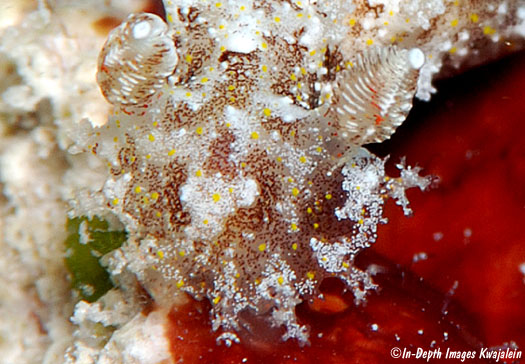
One other Kwajalein animal (below) was on top of a midlagoon pinnacle reef at 10 meters.
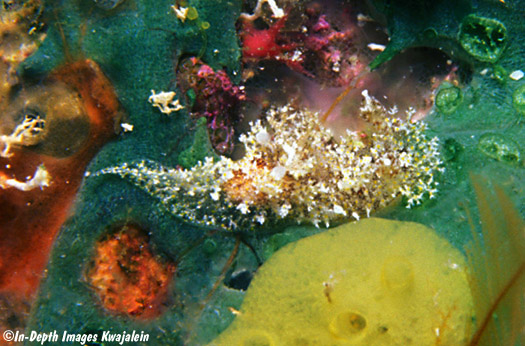
This tiny Plocamopherus is most likely a juvenile of P. ceylonicus. It measured about 8mm fully stretched out and was found on a Kwajalein Atoll lagoon reef under a rock in about 6m on 7 June 2009.
The next two shots show a specimen found at night on 13 June 2009 in a small Kwajalein Atoll seaward reef cave at a depth of about 15m.
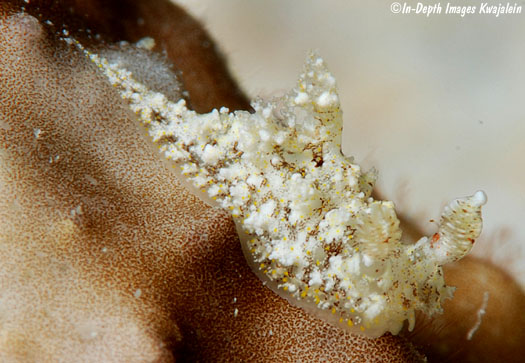
The one below was under a rock on a Kwajalein lagoon reef on 16 April 2012.
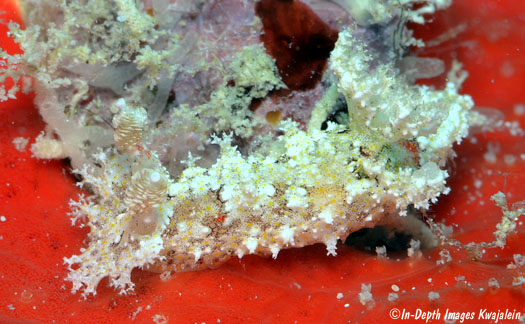
The specimen below from Majuro Atoll was found by John and Lynette Flynn.
Created 3 January 2007
Updated 13 April 2021